
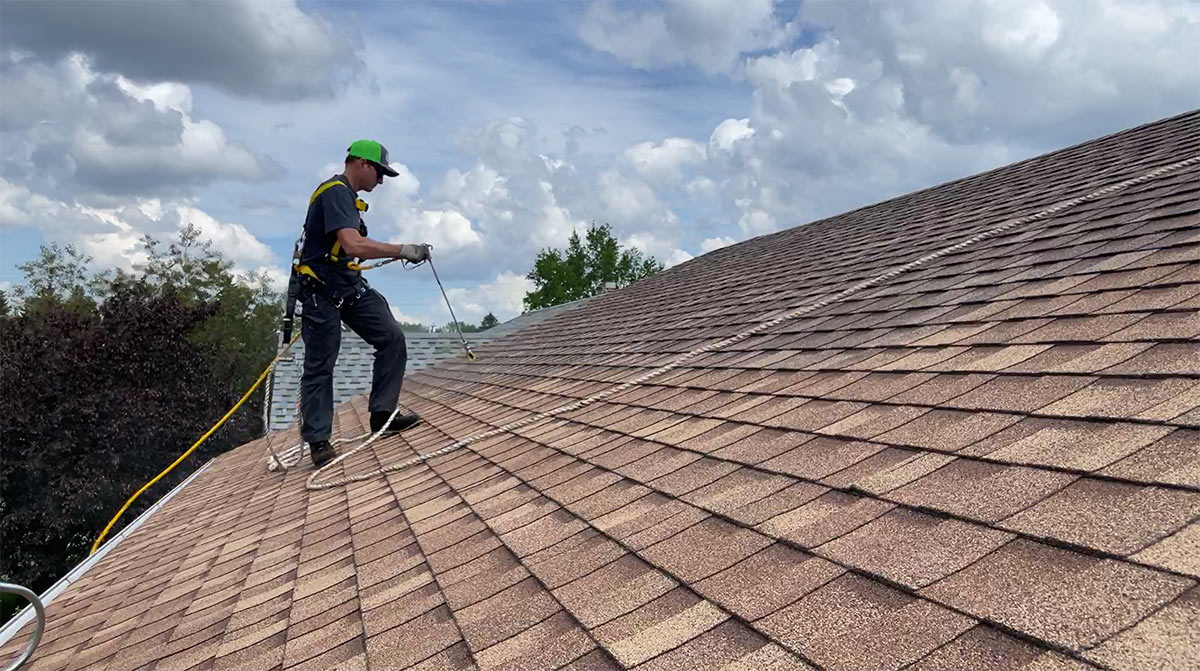
Roof Rejuvenation vs Roof Coatings and Sealants: What’s the Difference?
Looking for a spray-on roof coating for asphalt shingles? Before putting anything on your roof, it helps to understand that coatings, sealants and penetrating rejuvenation treatments are not the same thing.
A roof coating generally forms a protective layer over a compatible roofing surface. A shingle sealant is normally used in specific locations for bonding or repair. A penetrating rejuvenation treatment is intended to absorb into aging asphalt shingles rather than create a continuous membrane over them.
Why Are These Products So Easily Confused?
Mostly because roofing terminology is messy.
Search online and you'll find coatings, liquid sealants, roofing cement, waterproofing products, rejuvenation sprays and products marketed as restoration treatments.
Some are rolled on. Some are brushed on. Some come in a caulking tube. Some are sprayed across an entire roof.
Despite looking similar during application, they can be designed to do completely different things.
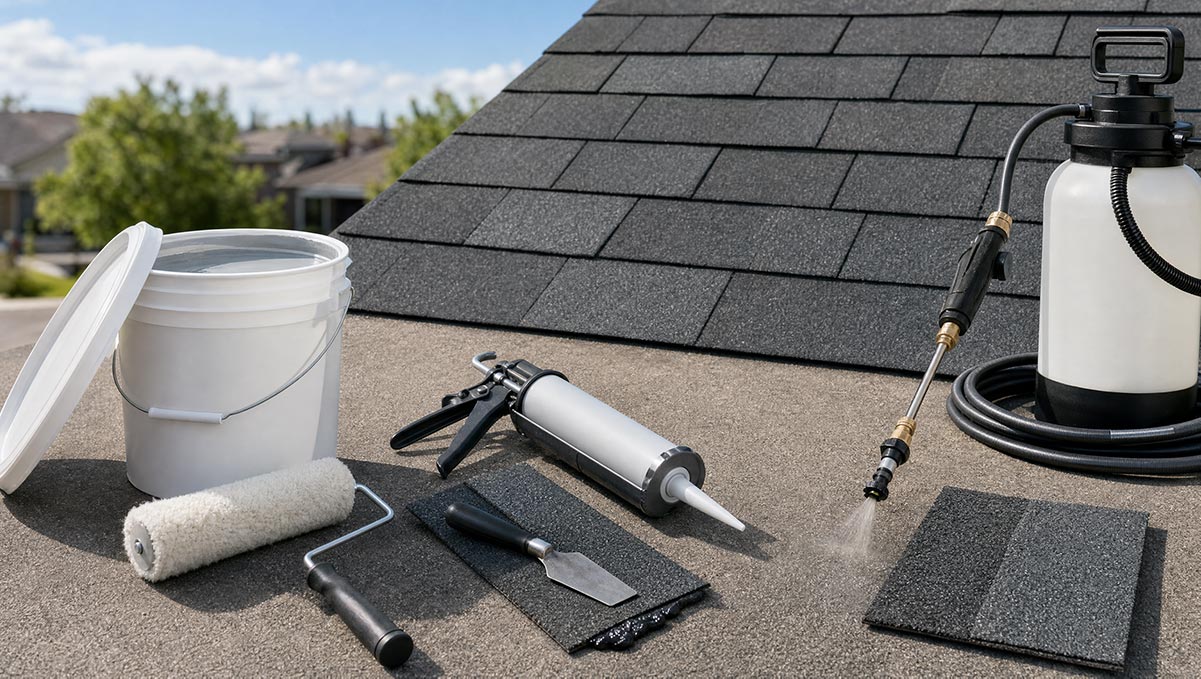
Roof Coating
Usually designed to cure into a protective surface layer over a compatible roofing system.
Roofing Sealant
Generally used in targeted areas to bond, seal or repair specific roofing details.
Roof Rejuvenator
Intended to penetrate into aging asphalt shingles rather than create a roof-wide film over them.
What Is a Roof Coating?
A roof coating is generally a liquid-applied product that cures into a protective layer over an existing roofing surface.
Depending on the system, coatings may be acrylic, silicone, asphaltic or use other chemistries.
There is nothing inherently wrong with roof coatings. They are widely used and can be extremely useful when installed on roofing systems they were designed for.
“Asphalt Roof Coating” Does Not Necessarily Mean Asphalt Shingles
This is one of the most important distinctions for homeowners searching for a roof coating for asphalt shingles.
The word asphalt appears in several very different roofing systems.
For example, Henry's Pro-Grade 197 Asphalt Emulsion is a legitimate professional roof coating designed for substrates including modified bitumen, smooth built-up roofing and aged metal roofing.
GAF likewise publishes silicone restoration systems for qualifying asphaltic roofs that include roof inspection, moisture scanning, cleaning, priming, seam detailing and application of a silicone coating.
Those are legitimate professional roofing systems.
But a low-slope asphaltic membrane and the asphalt shingles on a house are not automatically interchangeable substrates.
What Is a Shingle Sealant?
The word “sealant” causes another layer of confusion because it can refer to several different things.
Asphalt shingles themselves normally contain a factory-applied adhesive strip that helps overlapping shingles bond after installation.
Roofers can also manually seal individual shingles in specific situations.
For example, IKO's technical guidance permits small amounts of asphalt plastic cement beneath shingle tabs in certain applications such as high-wind areas, steep slopes or cold-weather installation.
Roofing mastics and sealants may also be used for localized details such as flashing, vents, penetrations or minor repairs.
Localized sealing is not the same as coating an entire roof.
If someone recommends a “roof sealant for shingles,” ask whether they mean a product for a particular joint or repair, or a liquid being applied across the complete roof surface.
What Is a Penetrating Roof Rejuvenation Treatment?
A penetrating roof rejuvenation treatment is intended to work differently from a film-forming coating.
Instead of creating a continuous new membrane over the mineral-granule surface, rejuvenation products are designed to move through the surface and into the asphalt portion of aging shingles.
Their intended purpose is generally to restore properties that decline as asphalt shingles age, particularly flexibility.
Bright Green Roof uses a plant-based, biobased shingle preservation oil intended to penetrate aging asphalt shingles rather than encapsulate the roof beneath a new membrane.
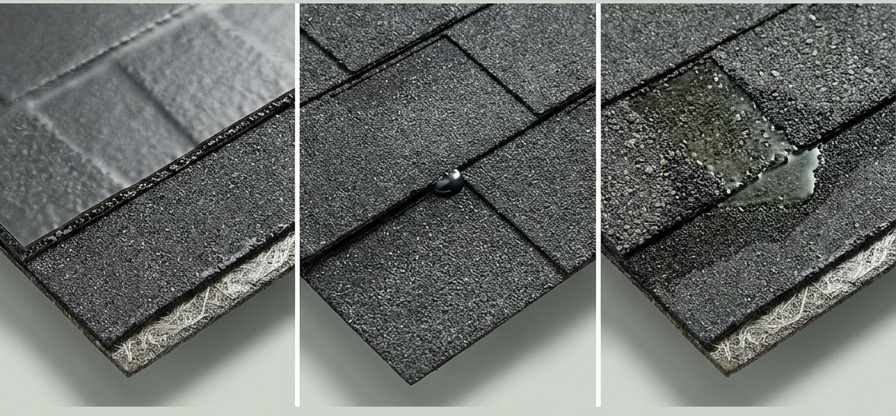
Surface Film vs. Localized Seal vs. Penetration
A useful way to understand these products is to look at where the material is intended to remain after application.
On the Surface
A coating cures into a new protective layer over the compatible roofing substrate.
At a Specific Location
Sealant usually bonds or protects an individual tab, joint, penetration or repair detail.
Into the Asphalt
A penetrant is intended to move into the existing asphalt rather than create a continuous roof-wide membrane.
What Is Each Product Actually Intended to Do?
Marketing terms can be vague. The physical problem a product is trying to solve is much more useful.
Surface Protection
Depending on the system: waterproofing, reflectivity, weather protection or restoration of a compatible roof membrane.
Targeted Sealing
Bonding individual shingles, sealing flashing, addressing joints or supporting specific localized repairs.
Shingle Preservation
Treating aging but structurally sound asphalt shingles with the goal of restoring properties such as flexibility.
Are Roof Coatings Recommended for Asphalt Shingles?
This deserves a careful answer.
ARMA advises homeowners to check with the original shingle manufacturer before applying any field treatment.
In a technical bulletin published July 24, 2026, the Asphalt Roofing Manufacturers Association strongly advised against field application of coatings or rejuvenators over installed asphalt shingles.
ARMA notes that formulations vary and raises potential concerns involving characteristics such as fire classification, algae resistance, impact resistance, moisture movement and the original shingle surface.
It recommends checking directly with the asphalt shingle manufacturer to determine whether a specific field treatment is acceptable.
That does not mean every roof coating is dangerous or ineffective.
Coatings are established roofing products with legitimate uses on many roofing systems.
The practical lesson is that compatibility matters. A product being intended for one type of asphalt roofing does not automatically make it appropriate for every asphalt shingle roof.
Does That Guidance Also Apply to Roof Rejuvenation?
Yes.
ARMA's current guidance specifically discusses rejuvenators as well as coatings.
The fact that a treatment penetrates the asphalt rather than forming a surface film does not automatically mean the original shingle manufacturer approves it.
If you're considering any field-applied rejuvenation treatment, useful questions include:
- Does my shingle manufacturer permit the treatment?
- Could it affect any remaining manufacturer warranty?
- What testing has been performed on the treatment itself?
- Which specific properties were tested?
- Who performed the testing?
- What warranty does the treatment provider offer?
Bright Green Roof's published product testing includes ASTM methods addressing properties such as pliability, granule adhesion and absorption.
That is evidence relating to the tested treatment. It should not be confused with blanket approval from every asphalt shingle manufacturer.
What Can Go Wrong With an Incompatible Product?
A properly specified roofing product can perform exactly as intended. Problems arise when a product is used on a roofing assembly it was not designed for.
The exact concern depends on the chemistry, roof system and application.
- Changing how moisture moves through the roof assembly
- Interacting with the original shingle surface
- Interacting with factory-applied adhesives
- Changing fire or impact-performance characteristics
- Changing appearance or colour
- Creating new maintenance requirements
- Potentially affecting manufacturer warranty coverage
DIY Roof Sprays vs. Professional Application
Homeowners can now find buckets, bottles and spray products making all kinds of roofing claims online and at building-supply stores.
Some may be legitimate products for their intended application.
The challenge is determining whether the product and the roof actually match.
A homeowner needs to understand the intended substrate, preparation, coverage rate, existing damage, surrounding materials and any warranty implications before applying it.
Professional coating systems illustrate how involved correct preparation can be. GAF's published silicone-over-asphaltic restoration process, for example, includes qualifying the roof, moisture inspection, repairs, washing, priming, detailing seams and controlled application of the final coating.
Professional rejuvenation should likewise begin by determining whether the existing asphalt shingles are actually suitable for treatment.
Questions to Ask About Ingredients and Testing
If someone proposes spraying any product over your asphalt shingles, you should be able to get clear answers to these questions.
What is the exact product?
Ask for the product name rather than accepting a vague description such as “roof treatment.”
Is it a coating, sealant or penetrant?
Ask whether it forms a cured surface film, seals localized areas or is intended to penetrate the asphalt.
What substrates is it designed for?
Look specifically for installed asphalt shingles rather than relying only on broad terms such as “asphalt roofing.”
What is actually in it?
A provider should be able to explain the basic formulation and provide appropriate product documentation.
Which tests were performed?
“ASTM tested” by itself isn't very specific. Ask for the test numbers and what those particular tests evaluate.
Who performed the testing?
Find out whether testing was internal, independent or carried out by another third party.
Questions to Ask About the Warranty
The word “warranty” deserves the same scrutiny as the word “tested.”
- What exactly is guaranteed?
- How long does coverage last?
- What conditions or failures are excluded?
- Is labour included?
- Does the warranty cover the treatment, the shingles or both?
- Is it transferable when the home is sold?
- Who is responsible for warranty claims?
- Could the treatment affect the original shingle warranty?
Bright Green Roof provides a five-year transferable warranty on qualified roofs.
That is Bright Green Roof's treatment warranty. Homeowners should still investigate any remaining manufacturer warranty applicable to their existing shingles.
How Do I Identify What Is Actually Being Proposed?
Before agreeing to any spray-on roof treatment, ask the contractor to complete this sentence:
“It cures into a protective membrane or layer over the existing roofing surface.”
“It bonds or seals this particular shingle tab, joint, penetration or repair area.”
“The treatment penetrates through the granule surface and into the asphalt portion of the existing shingles.”
Then ask the next question:
Roof Coating vs. Sealant vs. Rejuvenation
The main lesson isn't that one category is universally good and another universally bad. They are different tools designed for different jobs.
| Comparison | Roof Coating | Shingle Sealant | Penetrating Rejuvenation |
|---|---|---|---|
| Main action | Forms a surface layer | Bonds or seals targeted areas | Designed to penetrate into asphalt |
| Typical coverage | Large roof areas | Localized areas | Large areas of qualifying shingles |
| Typical purpose | Surface protection, restoration or reflectivity | Repairs, flashing or shingle bonding | Preserve aging asphalt shingles |
| Continuous film? | Usually | No | Not intended to |
| Repairs structural damage? | No | No | No |
| Can be spray-applied? | Some systems | Sometimes | Commonly |
| Suitable for every shingle roof? | No | No | No |
| Manufacturer compatibility matters? | Yes | Yes | Yes |
| Product-specific testing matters? | Yes | Yes | Yes |
What Bright Green Roof Is — And Is Not
Bright Green Roof is not a roof-wide film-forming coating.
Its shingle preservation product is a plant-based penetrating treatment intended for aging asphalt shingles that remain suitable for preservation.
Bright Green Roof's published testing includes evaluation relating to pliability, granule adhesion, absorption and fire behaviour.
It is a maintenance treatment, not a substitute for repairs or replacement when the roofing system has already failed.
Start With a Roof Assessment
If you are considering a penetrating rejuvenation treatment rather than a roof coating or sealant, contact a local Bright Green Roof provider for a roof assessment.
Bright Green Roof Edmonton
Find out whether your existing asphalt shingles are still suitable for preservation.
Visit Edmonton SiteBright Green Roof Calgary
Get a roof-specific assessment before deciding whether treatment, repair or replacement makes sense.
Visit Calgary SiteBright Green Roof Red Deer
Speak with your local provider about whether your aging shingles are still a suitable candidate.
Visit Red Deer SiteFrequently Asked Questions
Can you spray a roof coating over asphalt shingles?
Some products can physically be sprayed over shingles, but that does not establish that they are appropriate or approved for the application. ARMA currently advises checking with the original shingle manufacturer before applying any coating or rejuvenator to installed asphalt shingles.
Is roof rejuvenation the same as a roof coating?
No. A traditional roof coating generally cures into a protective layer over a compatible roof surface. A penetrating rejuvenation treatment is intended to absorb into the asphalt portion of an aging shingle instead of creating a continuous surface membrane.
What is the best roof coating for asphalt shingles?
There is no universal best coating for asphalt shingles. Many products described as asphalt roof coatings are designed for asphaltic membrane systems such as built-up roofing or modified bitumen rather than residential shingles. Check the product manufacturer's approved substrates and the shingle manufacturer's guidance before application.
Can I use roof sealant on shingles?
Roofing cement or other approved sealants can be appropriate for certain localized applications. For example, shingle manufacturers may specify asphalt plastic cement for manually sealing individual shingles in particular conditions. That is different from coating an entire roof in sealant.
Does a roof rejuvenation spray seal leaks?
A penetrating rejuvenation product should not be treated as a substitute for diagnosing and repairing a roof leak. Leaks can come from damaged shingles, flashing, penetrations, underlayment, decking or other components that require proper repair.
Are roof rejuvenation products tested?
Testing varies by product. Ask which specific test methods were used and what they measured rather than relying only on a broad “lab tested” claim. Bright Green Roof's published testing includes ASTM methods relating to pliability, granule adhesion and absorption.
Can roof rejuvenation affect my shingle warranty?
Potentially. Warranty terms vary by manufacturer. Homeowners should check the original shingle manufacturer's requirements before applying any field treatment. A warranty from the treatment provider is separate from the original shingle manufacturer's warranty.
Is a DIY shingle spray the same as a professional treatment?
Not necessarily. Products can differ in chemistry, concentration, intended substrate, application rate and testing. Professional treatment should also include determining whether the existing roof is actually a suitable candidate before anything is applied.