
How Long Do Asphalt Shingles Last in Alberta?
Roof age is useful, but it doesn't tell the whole story. Here's how long asphalt shingles typically last, what Alberta weather does to them, and how to tell whether an aging roof actually needs replacement.
Most asphalt shingle roofs last roughly 15 to 30 years. Basic 3-tab shingles commonly fall around 15–20 years, while architectural shingles can often reach 20–30 years or longer. In Alberta, weather, installation and the actual condition of the shingles can move that number considerably.
What Is the Typical Lifespan of Asphalt Shingles?
There isn't one age when an asphalt roof suddenly becomes "old."
Two roofs installed in the same year can be in completely different condition today. The type of shingle matters, but so do installation quality, attic ventilation, sun exposure, wind, hail and the conditions each section of the roof experiences.
For most Alberta homeowners, these are useful starting ranges:
A lighter, more economical asphalt shingle that generally has the shortest expected service life.
Thicker laminated construction generally gives architectural shingles a longer useful lifespan.
Higher-end shingles may last longer when installation, ventilation and weather conditions are favourable.
A 30-Year Warranty Doesn't Necessarily Mean a 30-Year Roof
One of the easiest mistakes to make when estimating the lifespan of an asphalt roof is treating the manufacturer's warranty like a predicted replacement date.
They are not the same thing.
Roofing manufacturers may describe products as 25-year, 30-year or even limited-lifetime shingles, but the warranty itself can include different coverage periods, prorated coverage and requirements around installation and roofing components.
The warranty also generally protects against specific manufacturing defects. It doesn't guarantee that every roof will remain in perfect condition for the advertised warranty period.
Think of the warranty as protection against certain product problems, rather than a countdown clock telling you exactly when the shingles need to come off.
Why Alberta Weather Matters
Asphalt shingles spend their entire lives outside, and Alberta gives them a lot to deal with.
Over the course of a year, a roof can experience intense summer sun, deep winter cold, snow, strong winds, rapid temperature swings and severe storms.
That repeated exposure contributes to the gradual loss of flexibility that happens as asphalt shingles age.
3-Tab vs. Architectural Shingles
If you're trying to estimate how much life your roof might have left, knowing which type of asphalt shingle you have is useful.
3-Tab Shingles
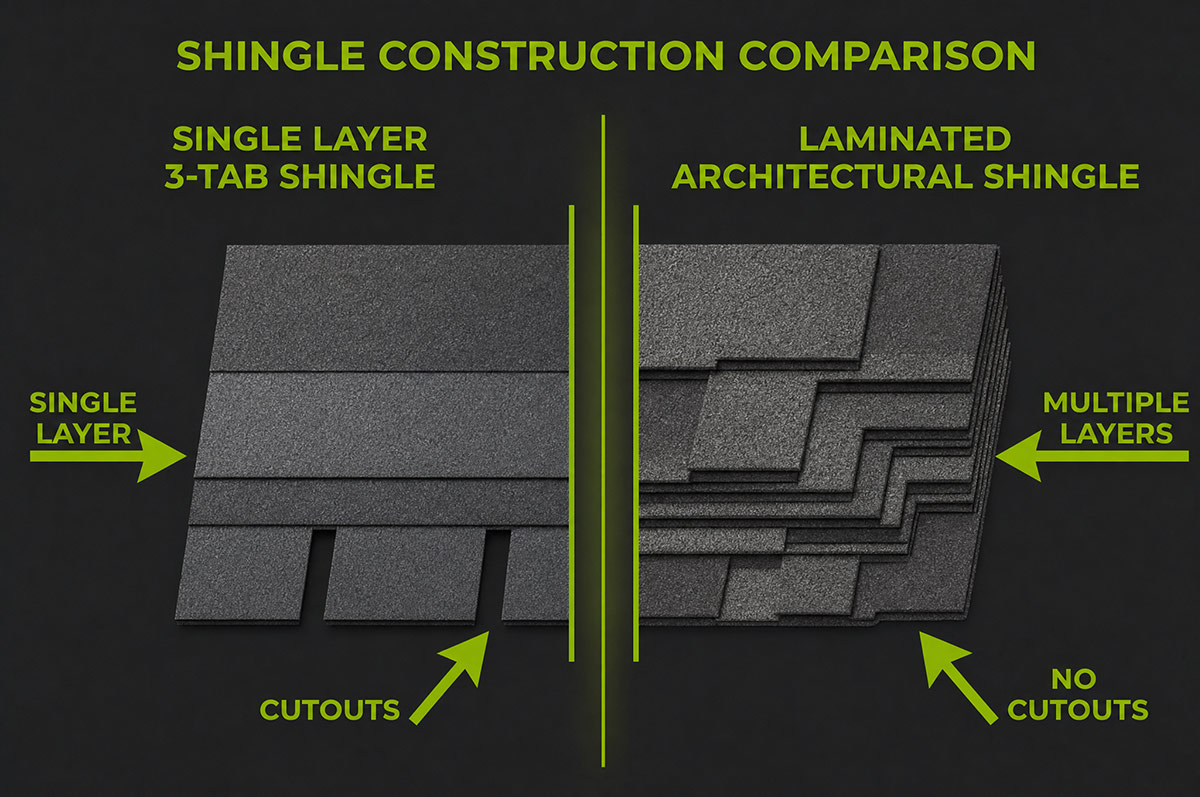
Traditional 3-tab shingles use a relatively flat construction with cutouts that create three tabs. They were extremely common on Canadian homes for decades and remain an economical roofing product.
Because they are generally lighter and less substantial than laminated architectural shingles, their expected service life tends to be shorter.
Architectural Shingles
Architectural shingles, sometimes called dimensional or laminated shingles, combine multiple layers to create a thicker shingle with more depth.
For a properly installed architectural shingle roof, 20 to 30 years is a useful general lifespan range.
Roof Age Matters. Roof Condition Matters More.
Imagine two Alberta homes that both received new asphalt shingles in 2010.
Same Age. Easier Life.
Good attic ventilation, quality installation, relatively even sun exposure and no major hail damage.
Same Age. More Stress.
Poor ventilation, heavy southern exposure and several significant storms over its lifetime.
Both roofs are technically the same age. They may be nowhere near the same condition.
Even different sections of the same roof can age at different rates depending on their orientation, shade, moisture and wind exposure.
That's why automatically replacing asphalt shingles because they've reached a certain birthday can sometimes mean replacing roofing material that still has usable service life remaining.
The opposite is also true. A roof shouldn't be assumed healthy simply because it is "only 12 years old."
An Aging Roof Is Not Necessarily a Failing Roof
A 15-year-old roof shouldn't look identical to the day it was installed. Some visible change is a normal part of weathering.
Normal Aging Can Include
- Some fading or change in colour
- Modest granule loss as shingles age
- Shingles becoming less flexible than when new
- Different roof planes aging at slightly different rates
- General weathering without widespread failure
Signs Worth Investigating
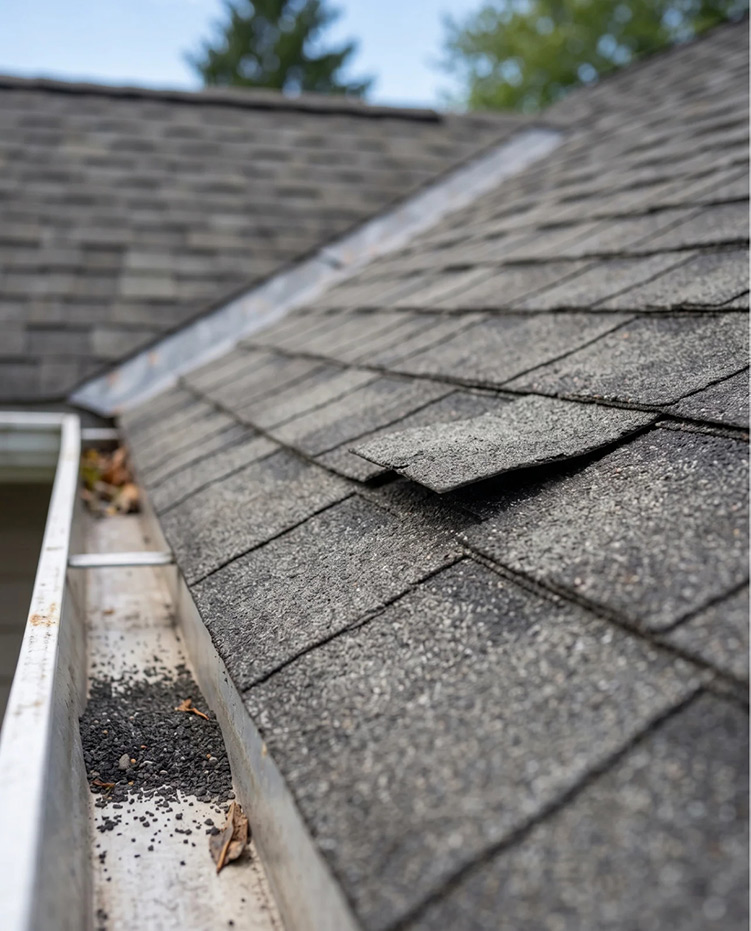
- Widespread curling or lifting edges
- Cracking across many shingles
- Large bald areas with heavy granule loss
- Missing or loose shingles
- Shingles breaking easily when handled
- Repeated leaks or moisture damage
- Large areas of storm or impact damage
One damaged shingle doesn't necessarily condemn an entire roof. Widespread deterioration is different.
When Can Roof Rejuvenation Make Sense?
There is a valuable period between "brand new roof" and "roof needs replacement."
If asphalt shingles are beginning to dry and age but remain structurally sound, homeowners may still have options to preserve the existing roof rather than immediately replacing it.
Shingle rejuvenation is one of those options.
The goal is not to repair rotten decking, stop an existing structural failure or magically turn a failed roof into a good one. It is a preventative treatment intended for shingles that still have structural integrity but are losing some of the flexibility they had when they were newer.
This is also why timing matters. Waiting until shingles are badly cracked, extensively curled or structurally failing reduces the options available.
When Is Roof Replacement the Responsible Option?
Roof preservation doesn't make sense for every roof.
Sometimes replacement really is the correct decision.
If a roof has extensive leaks, widespread shingle failure, severely brittle or broken shingles, significant decking problems, large areas of missing material or damage that compromises the roofing system, extending the life of the existing shingles may no longer be realistic.
The objective shouldn't be to avoid roof replacement at all costs. It should be to avoid replacing a roof before replacement is actually necessary.
How Can I Find Out How Old My Roof Is?
If you purchased an existing home, you may not know exactly when the current shingles were installed. Start with the easiest records first.
Check Your Home Records
Look for roofing invoices, renovation documents, warranties or receipts left by the previous owner.
Look at Your Home Inspection
The inspection completed when you purchased the property may contain an estimated roof age or notes about the shingle condition.
Check Insurance and Permit Records
Insurance documents, real-estate disclosures and municipal permit records may help narrow down the installation year.
Ask the Previous Owner
Even an approximate date can be useful if no formal paperwork still exists.
Assess the Roof You Have Today
If the exact date remains unknown, don't get too hung up on it. An inspection of the shingle type, granule coverage, flexibility, flashing and overall condition is ultimately more useful than an exact birthday.
Find Out What Condition Your Roof Is Actually In
If your shingles are aging but remain structurally sound, get a roof-specific assessment before assuming replacement is necessary. Bright Green Roof has local providers serving homeowners across Alberta.
Bright Green Roof Edmonton
Get a local assessment and find out whether your aging asphalt shingles may still be suitable for preservation.
Visit Edmonton SiteBright Green Roof Red Deer
Speak with your local Red Deer provider about the condition and remaining options for your asphalt roof.
Visit Red Deer SiteBright Green Roof Calgary
Have an aging Calgary roof assessed before automatically assuming that a full roof replacement is required.
Visit Calgary SiteFrequently Asked Questions
A few of the most common questions Alberta homeowners ask about asphalt shingle lifespan and roof age.
How long do asphalt shingles last in Alberta?
Most asphalt shingle roofs have a useful lifespan somewhere around 15 to 30 years. Basic 3-tab shingles commonly fall toward the lower end of the range, while architectural shingles generally last longer. Alberta weather, installation quality, ventilation, storm exposure and maintenance can all affect the actual lifespan.
Is a 15-year-old asphalt roof old?
A 15-year-old roof is old enough that its condition deserves attention, but age alone does not mean it needs replacement. A well-performing architectural roof at 15 years may still have substantial usable life remaining, while another roof of the same age could be much further along.
Can asphalt shingles last 30 years in Canada?
Yes. Some architectural asphalt shingle roofs can reach 30 years or longer when the shingles are high quality, installation and ventilation are good and the roof has avoided unusual damage. Thirty years shouldn't be treated as a guaranteed lifespan, however.
How do I know how much life my roof has left?
There is no reliable formula based only on age. An assessment should consider granule coverage, cracking, curling, shingle flexibility, previous repairs, flashing, storm damage, ventilation and the condition of the overall roofing system.
Should I replace a 20-year-old roof if it isn't leaking?
Not automatically. Twenty years is an appropriate age to inspect an asphalt roof carefully, but a roof's birthday alone isn't enough to make a replacement decision. If the shingles remain structurally sound, maintenance or preservation may still be possible.
Can roof rejuvenation extend the lifespan of asphalt shingles?
Roof rejuvenation is designed to help preserve aging asphalt shingles that are becoming dry but remain structurally sound. It cannot repair structural damage or rescue a roof that has already failed, which is why the roof should be assessed first to determine whether it is a suitable candidate.